
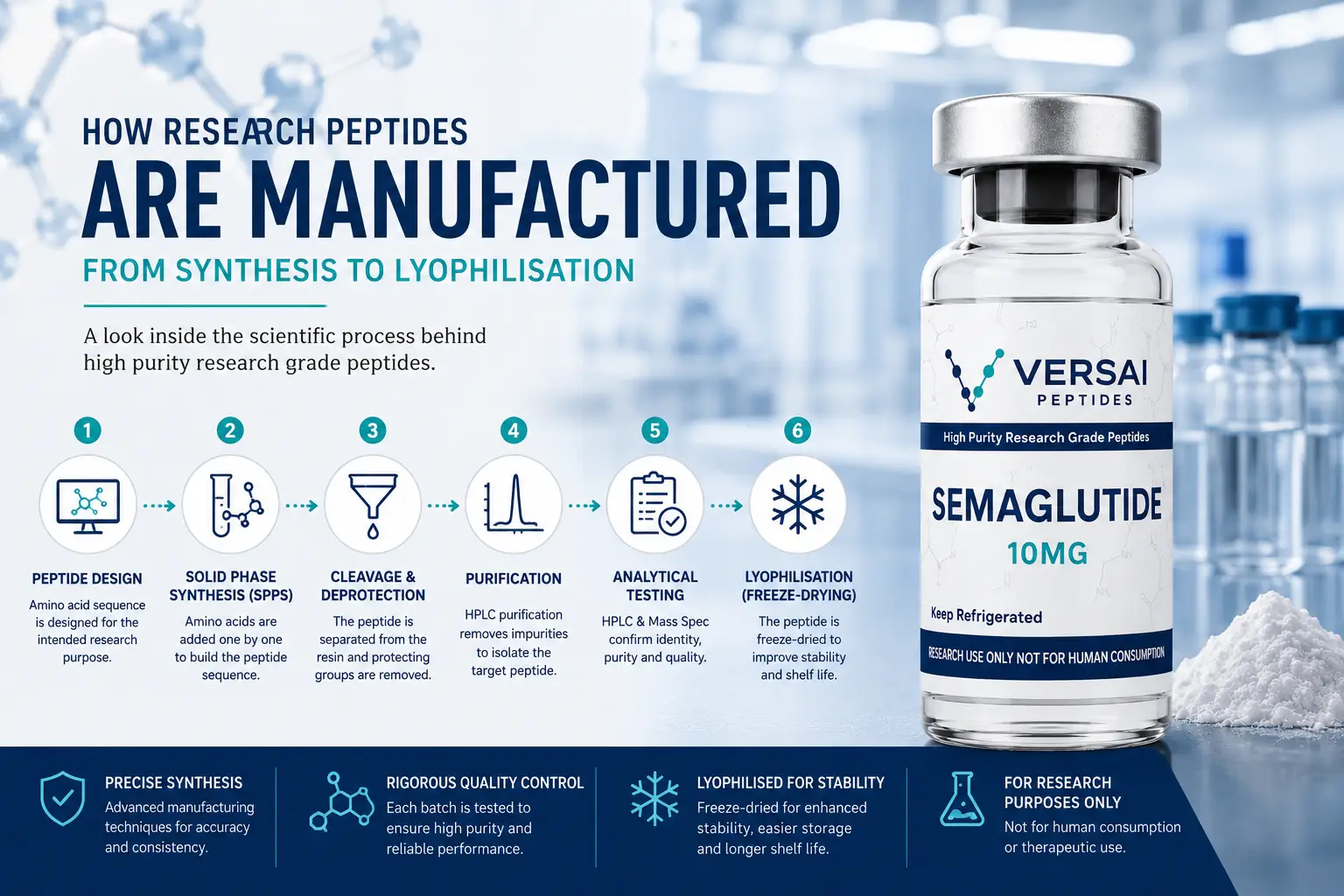
How Research Peptides Are Manufactured | Versai Biotech
Discover how research peptides are manufactured, from amino acid synthesis and purification to quality testing and lyophilisation. Learn the science behind research-grade peptides.
Introduction
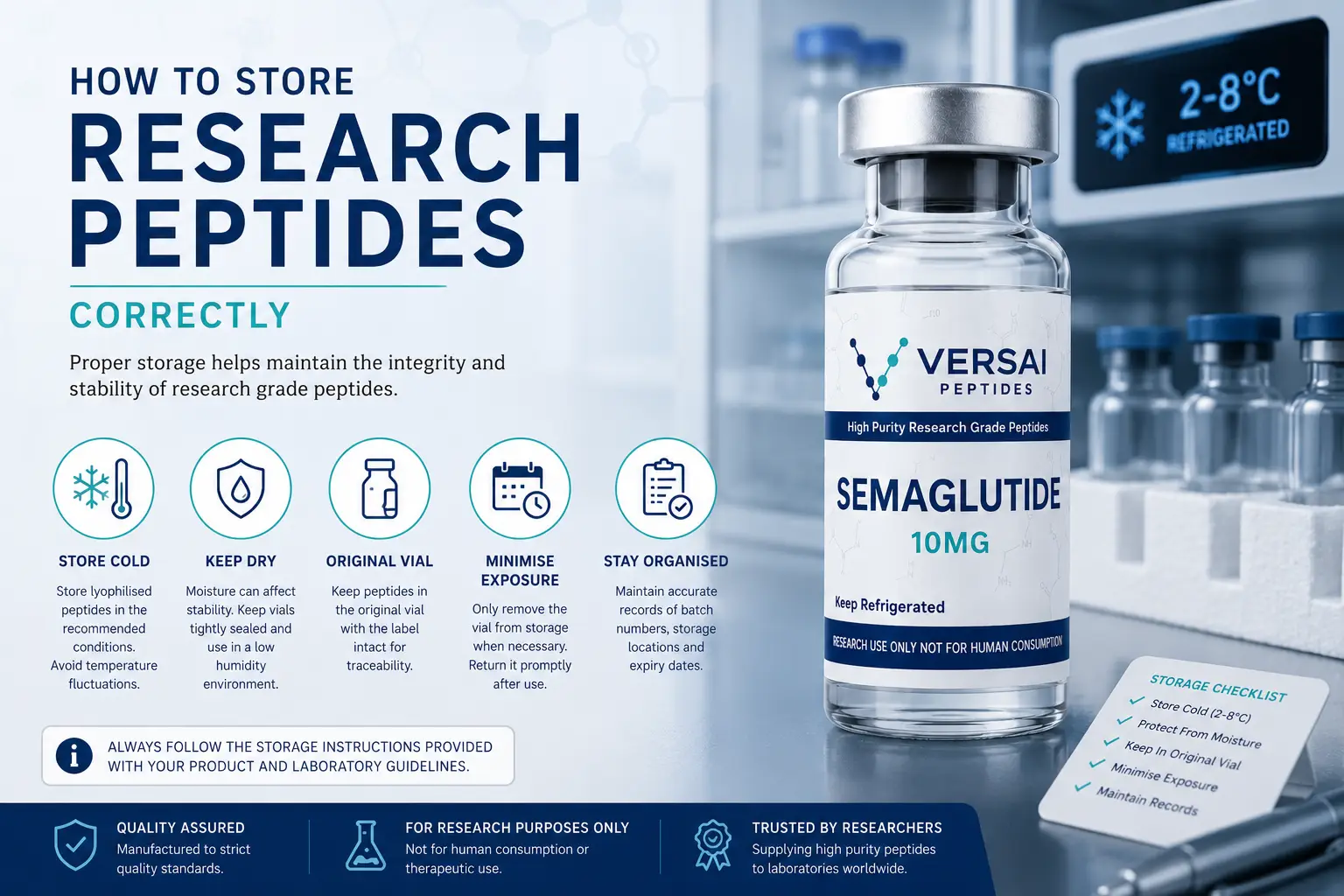
Proper storage is an important part of maintaining the integrity of research materials in laboratory environments. While manufacturing quality is essential, how research peptides are handled after they are received can also influence their suitability for scientific research.
Research peptides are commonly supplied as lyophilised (freeze-dried) powders, helping to improve stability during transportation and storage. However, every peptide has its own characteristics, and storage recommendations may vary depending on the specific product and the manufacturer’s guidance.
This guide explains the fundamentals of storing research peptides, why storage matters, and the general laboratory practices researchers should follow.
Disclaimer: Products supplied by Versai Biotech Ltd are intended for laboratory research purposes only. They are not intended for human consumption, therapeutic use, veterinary use, diagnosis, treatment, or prevention of disease. Researchers should always follow the storage instructions supplied with each product.
Why Is Proper Storage Important?
Research peptides are precision-manufactured materials used in scientific investigations. Appropriate storage helps laboratories maintain organised workflows and supports good laboratory practice.
General storage considerations include:
Researchers should always refer to the specific storage guidance provided for each peptide.
Why Are Most Research Peptides Supplied as Lyophilised Powder?
Many research peptides are supplied in a lyophilised (freeze-dried) form.
Lyophilisation removes water from the peptide under carefully controlled conditions, leaving a dry powder that is generally more suitable for transportation and storage than a liquid solution.
Benefits of lyophilised peptides may include:
Understanding Storage Conditions
Storage recommendations differ between peptides and manufacturers. The appropriate conditions depend on the specific product and its intended laboratory use.
Researchers should always:
If product-specific guidance differs from general recommendations, the manufacturer’s instructions should always take priority.
Protecting Research Peptides from Moisture
Moisture is one of the environmental factors that laboratories aim to minimise when handling lyophilised materials.
Good laboratory practice may include:
Minimising Temperature Fluctuations
Repeated changes in temperature may not be desirable for many laboratory materials.
Researchers often seek to minimise unnecessary temperature fluctuations by:
The manufacturer’s guidance should always be followed.
The Importance of Original Packaging
Professional laboratory packaging provides more than product identification.
Original packaging commonly includes:
Keeping peptides in their original packaging helps maintain traceability throughout laboratory workflows.
Organising Research Peptides in the Laboratory
Good organisation can support efficiency and reduce the risk of handling errors.
Many laboratories use inventory systems that record:
Maintaining accurate records supports traceability and inventory management.
Best Practices for Handling Research Peptides
General laboratory handling practices include:
These practices help support consistent laboratory procedures.
Choosing a Reliable Research Peptide Supplier
Storage begins before a product arrives at the laboratory.
When selecting a supplier, researchers may consider:
Secure Packaging
Packaging should help protect products during transportation.
Clear Product Information
Researchers benefit from clear descriptions and transparent labelling.
Reliable Shipping
Efficient shipping helps laboratories receive materials in good condition.
Professional Customer Support
Responsive communication is valuable when questions arise regarding products or orders.
Frequently Asked Questions
Why are research peptides supplied as freeze-dried powder?
Freeze-drying removes water from the peptide, creating a dry material that is generally easier to transport and store than liquid preparations.
How should research peptides be stored?
Researchers should always follow the storage instructions supplied by the manufacturer, as recommendations can vary between products.
Why is moisture protection important?
Keeping lyophilised materials appropriately protected from unnecessary moisture exposure is a common aspect of laboratory handling.
Can all peptides be stored in the same way?
No. Storage requirements may differ depending on the peptide and the manufacturer’s guidance. Product-specific instructions should always take priority.
Why is batch information important?
Batch identification helps laboratories maintain accurate records and supports traceability within research workflows.
Why Choose Versai Biotech Ltd?
Versai Biotech Ltd supplies research peptides for scientific and laboratory research.
Our commitment includes:
Every product is supplied strictly for laboratory research purposes only.
Conclusion
Proper storage is an important part of laboratory practice. By following manufacturer guidance, maintaining organised inventory systems, and handling materials carefully, researchers can support consistent laboratory workflows.
At Versai Biotech Ltd, we are committed to supplying research peptides with clear product information, secure packaging, and transparent laboratory-use labelling to support the needs of the scientific research community.
Whether you are establishing a new laboratory workflow or expanding an existing research programme, understanding the principles of research peptide storage is an important step in maintaining organised and professional laboratory practices.
Discover how research peptides are manufactured, from amino acid synthesis and purification to quality testing and lyophilisation. Learn the science behind research-grade peptides.

New to research peptides? This complete beginner’s guide explains what research peptides are, how they are manufactured, why purity matters, and how they are commonly used in scientific laboratory research.