Introduction
Research peptides have become an increasingly important tool in modern scientific studies. Used across universities, biotechnology companies, pharmaceutical research laboratories, and academic institutions, these short chains of amino acids help researchers investigate biological processes, molecular interactions, and laboratory methodologies.
If you’re new to the field, you may be wondering: What are research peptides? How are they made? What are they used for in scientific research?
This guide explains the fundamentals of research peptides, how they are produced, how they are stored, and why quality is important. It also outlines the purpose of research-grade peptides while emphasizing responsible laboratory use.
Disclaimer: Products supplied by Versai Biotech Ltd are intended for laboratory research purposes only. They are not intended for human consumption, therapeutic use, veterinary use, diagnosis, treatment, or prevention of disease.
What Are Peptides?
Peptides are short chains of amino acids connected by peptide bonds. Amino acids are often referred to as the building blocks of proteins. While proteins may contain hundreds or thousands of amino acids, peptides are generally much shorter.
Within scientific research, peptides are studied because they can help researchers investigate:
- Protein interactions
- Cell signalling pathways
- Molecular biology
- Biochemistry
- Receptor binding
- Laboratory assay development
- Analytical method validation
Their defined structures make them useful tools in controlled laboratory environments.
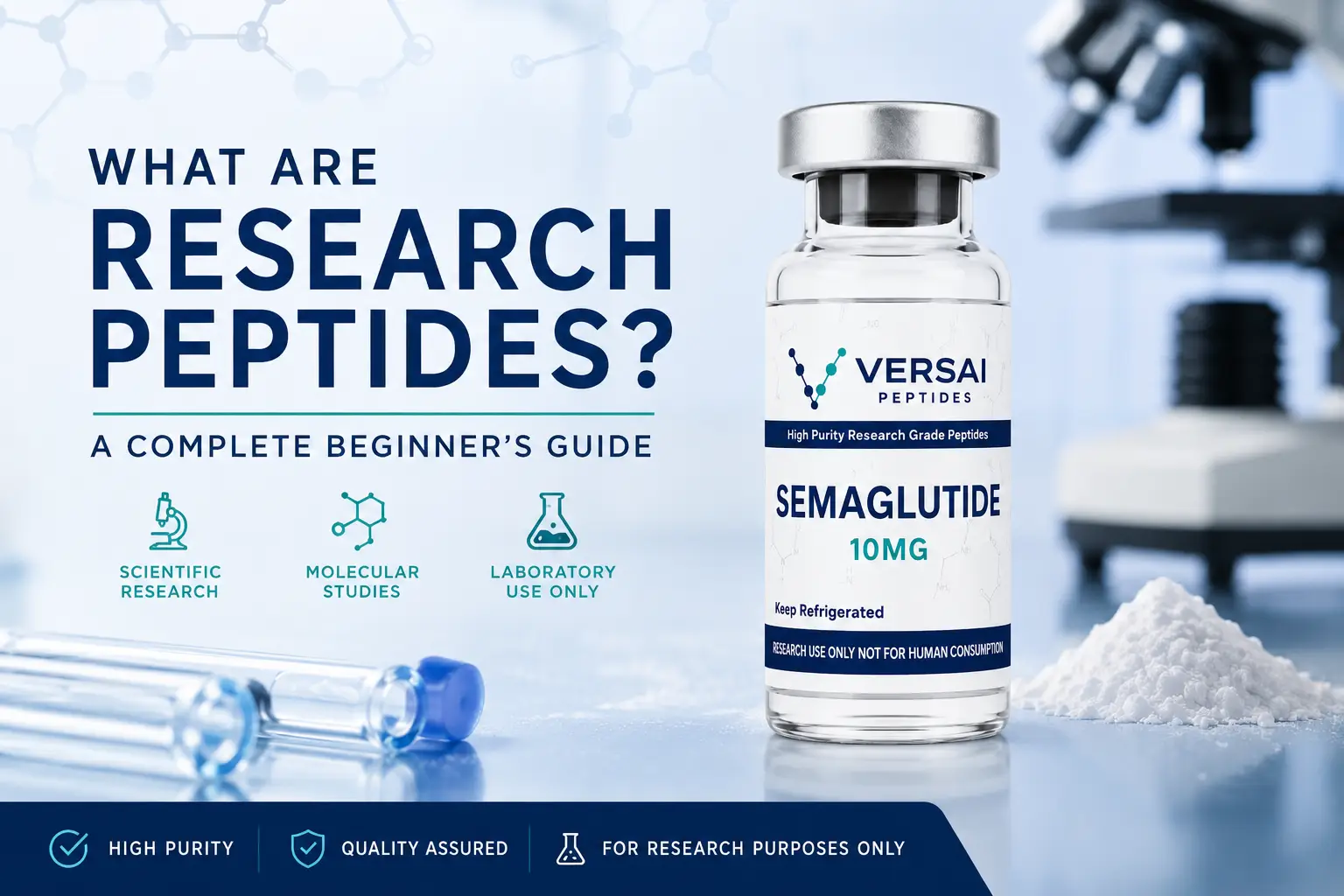
What Are Research Peptides?
Research peptides are peptides produced specifically for scientific investigation.
Unlike products developed as licensed medicines, research peptides supplied by companies such as Versai Biotech Ltd are manufactured and distributed for laboratory research only.
Researchers may use them in laboratory settings to explore:
- Molecular mechanisms
- Biochemical pathways
- Laboratory protocols
- Analytical techniques
- Experimental assay development
They are commonly supplied as a lyophilised (freeze-dried) powder to support stability during transport and storage.
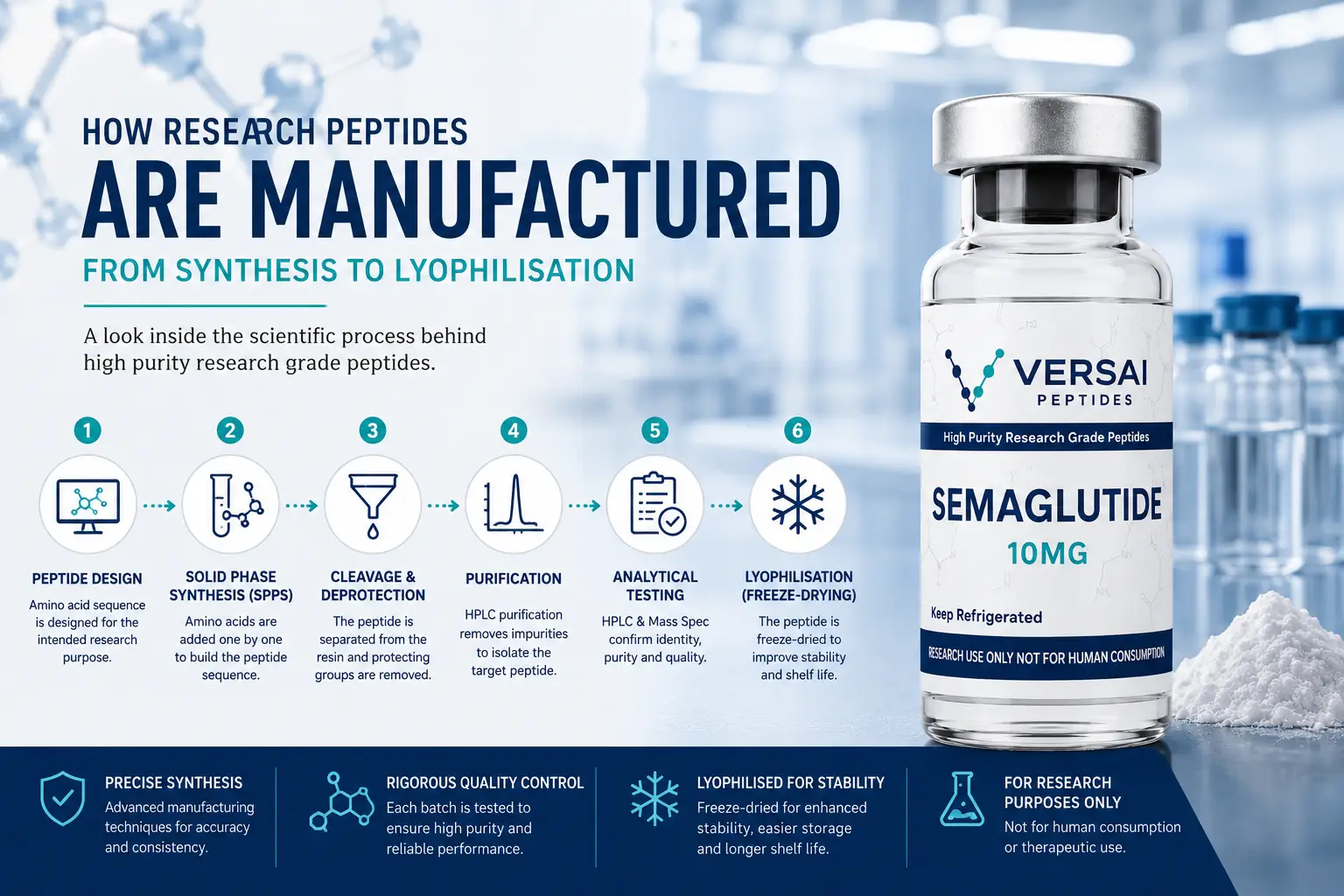
How Are Research Peptides Manufactured?
Producing research peptides involves several carefully controlled stages.
1. Peptide Design
Scientists first determine the amino acid sequence required for a particular research objective.
Each amino acid is arranged in a precise order to create the desired peptide.
2. Chemical Synthesis
Many research peptides are produced using Solid Phase Peptide Synthesis (SPPS).
This manufacturing method enables amino acids to be added sequentially until the required sequence has been assembled.
The process includes multiple purification and quality-control stages.
3. Purification
After synthesis, impurities and incomplete peptide sequences are removed using analytical purification techniques.
High-quality purification helps ensure the peptide closely matches the intended sequence.
4. Quality Testing
Manufacturers typically perform analytical testing to verify product quality.
Common techniques may include:
- High-performance liquid chromatography (HPLC)
- Mass spectrometry (MS)
- Identity verification
- Purity assessment
Documentation provided by manufacturers may vary depending on the product and supplier.
5. Lyophilisation
Many peptides are then freeze-dried.
Lyophilisation removes water under controlled conditions, producing a dry powder that is generally more stable for laboratory storage than a liquid solution.
Why Are Peptides Supplied as a Freeze-Dried Powder?
Freeze-dried peptides offer several practical advantages for laboratory research.
These include:
- Improved storage stability
- Reduced moisture exposure
- Easier transportation
- Longer shelf life when stored appropriately
- Convenient preparation according to laboratory protocols
This is one reason why many research peptide suppliers distribute products in lyophilised form.
Why Is Peptide Purity Important?
In laboratory research, consistency is essential.
Higher-purity materials can help researchers reduce unwanted variables in experimental work.
Purity may influence:
- Experimental reproducibility
- Analytical consistency
- Laboratory validation
- Research reliability
Researchers should always review the documentation supplied with products and follow appropriate laboratory procedures.
Common Areas of Scientific Research
Research peptides are studied across many scientific disciplines.
Examples include:
Molecular Biology
Researchers investigate how peptides interact with proteins, receptors, and signalling molecules.
Biochemistry
Peptides may be used when studying enzyme interactions, molecular structures, and biochemical pathways.
Cell Biology
Laboratories may investigate cellular responses under controlled experimental conditions.
Pharmaceutical Research
Peptides can form part of early-stage laboratory investigations into biological mechanisms before any clinical development process.
Analytical Research
Scientists often use peptides when validating analytical equipment and laboratory techniques.
Why Laboratory Quality Matters
Selecting a reputable supplier helps researchers obtain materials intended for scientific use.
When evaluating research peptide suppliers, laboratories often consider:
- Product consistency
- Manufacturing quality
- Clear labelling
- Appropriate packaging
- Reliable shipping
- Transparent documentation
- Responsive customer support
These factors can contribute to a smoother laboratory workflow.
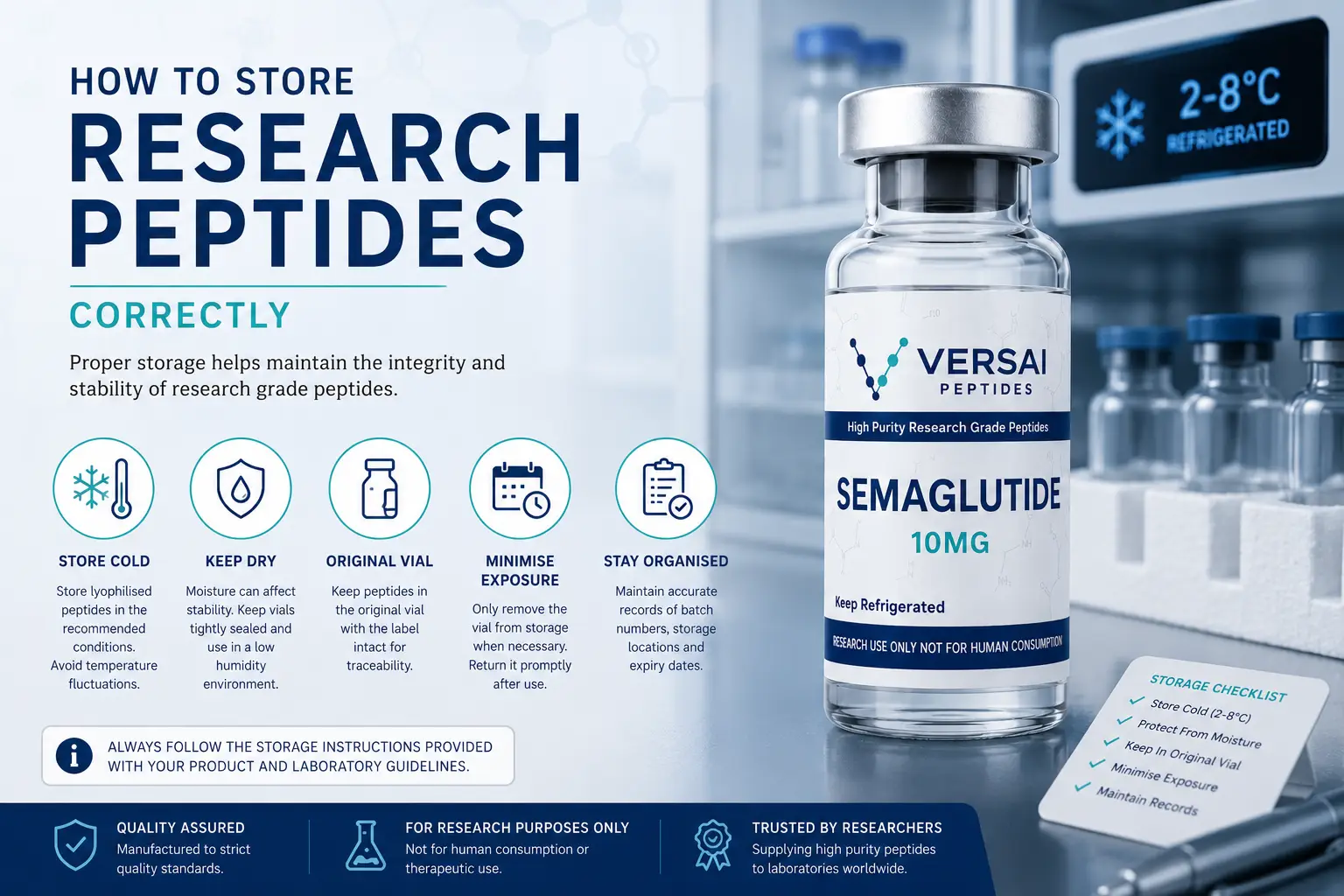
How Should Research Peptides Be Stored?
Storage recommendations depend on the specific peptide and laboratory protocol.
General best practice includes:
- Store according to the manufacturer’s instructions.
- Protect products from excess heat and moisture.
- Keep containers sealed until required.
- Minimise unnecessary temperature fluctuations.
- Handle products using appropriate laboratory procedures.
Researchers should always follow the product-specific guidance provided with the material.
Choosing a Research Peptide Supplier
When selecting a supplier, researchers may wish to consider:
Product Information
Clear product descriptions help laboratories identify the correct materials.
Packaging
Professional packaging can help protect products during transportation.
Customer Support
Reliable communication is important if researchers have questions regarding orders or documentation.
Laboratory Focus
Suppliers should clearly state that products are intended for laboratory research only where applicable.
Frequently Asked Questions
What are research peptides?
Research peptides are short chains of amino acids supplied for scientific and laboratory research purposes. They are commonly used to study molecular interactions, biochemical processes, and laboratory methodologies.
Are research peptides medicines?
Research peptides supplied by Versai Biotech Ltd are sold for laboratory research purposes only. They are not intended for human consumption, diagnosis, treatment, or prevention of disease.
Why are peptides freeze-dried?
Freeze-drying (lyophilisation) removes moisture, helping improve product stability during storage and transportation.
What is peptide purity?
Purity refers to how closely a peptide preparation matches the intended compound after manufacturing and purification. Researchers often consider purity when selecting materials for laboratory studies.
How should research peptides be stored?
Storage requirements vary depending on the specific peptide. Researchers should always follow the manufacturer’s product instructions and established laboratory procedures.
Why Choose Versai Biotech Ltd?
At Versai Biotech Ltd, we are committed to supplying research peptides intended for laboratory and scientific research.
We focus on:
- High-quality research products
- Clear product information
- Secure packaging
- Reliable UK shipping
- Responsive customer service
- A commitment to supporting the research community
Our aim is to provide researchers with reliable products while maintaining transparency about the intended use of every item we supply.
Conclusion
Research peptides continue to play an important role in modern scientific investigation. Their well-defined structures make them valuable tools for studying biological and biochemical processes in laboratory environments.
Whether you are exploring peptide science for the first time or sourcing materials for ongoing laboratory work, understanding how research peptides are manufactured, stored, and handled can help support good laboratory practice.
Versai Biotech Ltd is proud to supply research peptides for scientific research purposes only, with a focus on quality, transparency, and professional service.